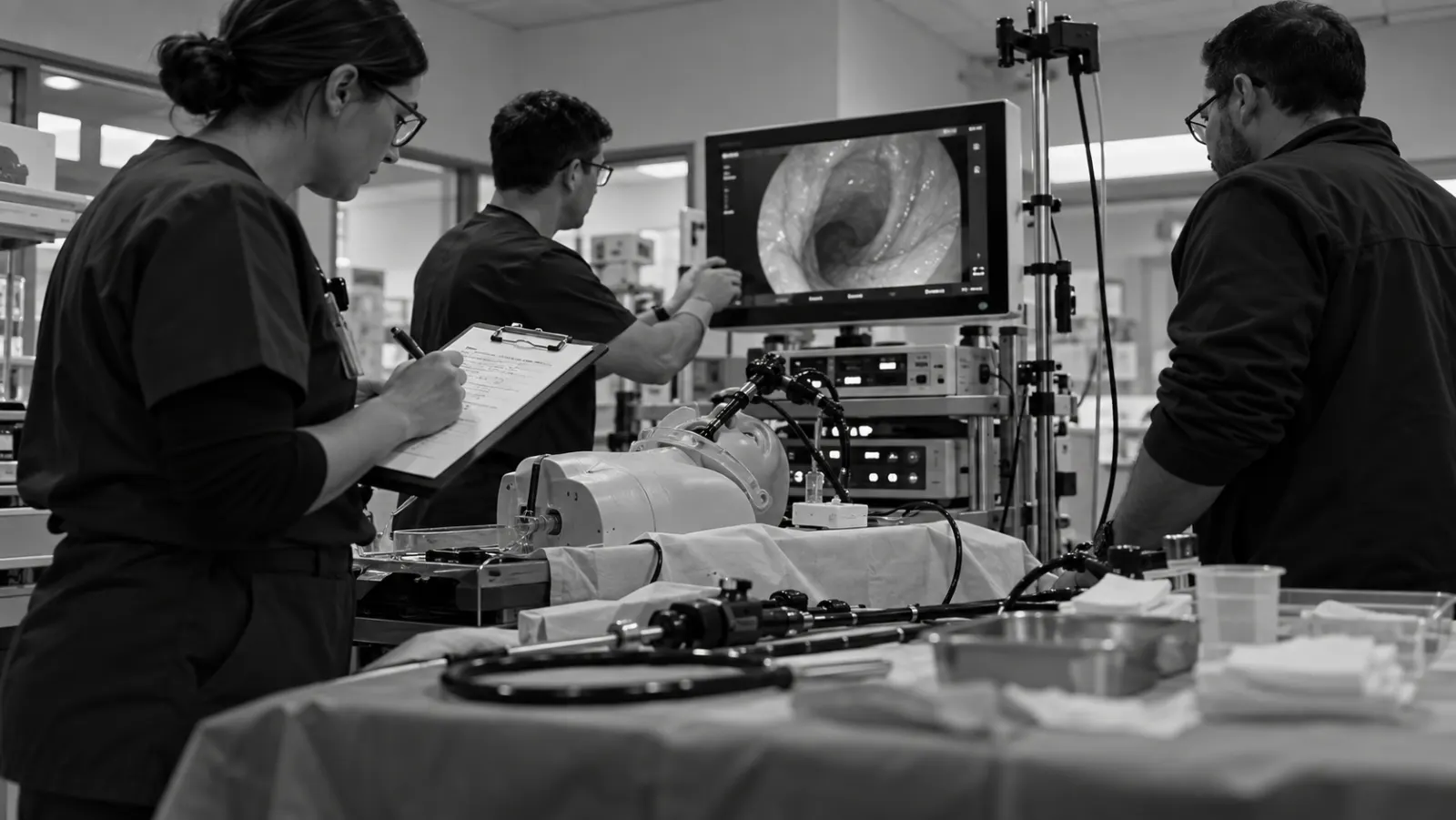
GI Genius introduced an AI-assisted device into an existing clinical procedure, which made adoption a program problem rather than a technical one.
Medtronic · GI Genius
Challenge
Standard colonoscopy misses about 26% of polyps, so the clinical case was clear and the adoption path was not. Clinical evidence, procedural workflow, device integration, and external communication each had different owners and different approval paths. Run as a single workstream they would have blocked one another. Run as four independent ones they would have missed what passes between them — evidence that integration work depends on, workflow decisions that change which evidence is needed.
Action
Engaged through Boundless Life Science Group, for a device developed by Cosmo Pharmaceuticals and distributed by Medtronic, I separated the work into accountable streams and then made the dependencies between them explicit, which is the part that usually goes missing. Clinical workflow, technical integration, evidence requirements, and market readiness each got an owner and their own path, while the readiness plan was organized around the decisions and evidence they owed each other rather than around dates. The Integrated Program Architecture carried that shared picture: what each stream produced, who consumed it, and which decision was currently blocking. Architecture accepted, workstreams funded, and dependencies owned were the conditions for the program to commit.
Result
The design connected the technical system to clinical use, evidence requirements, and launch preparation without collapsing them into one plan no single owner could carry. A delay in one stream surfaced as a named decision rather than as a surprise downstream. The device was authorized by the FDA through the De Novo pathway in April 2021, three years after this engagement; published trials report 99.7% per-lesion sensitivity (Hassan et al., 2020) and a 14% gain in adenoma detection (Repici et al., 2020).